Breast augmentation

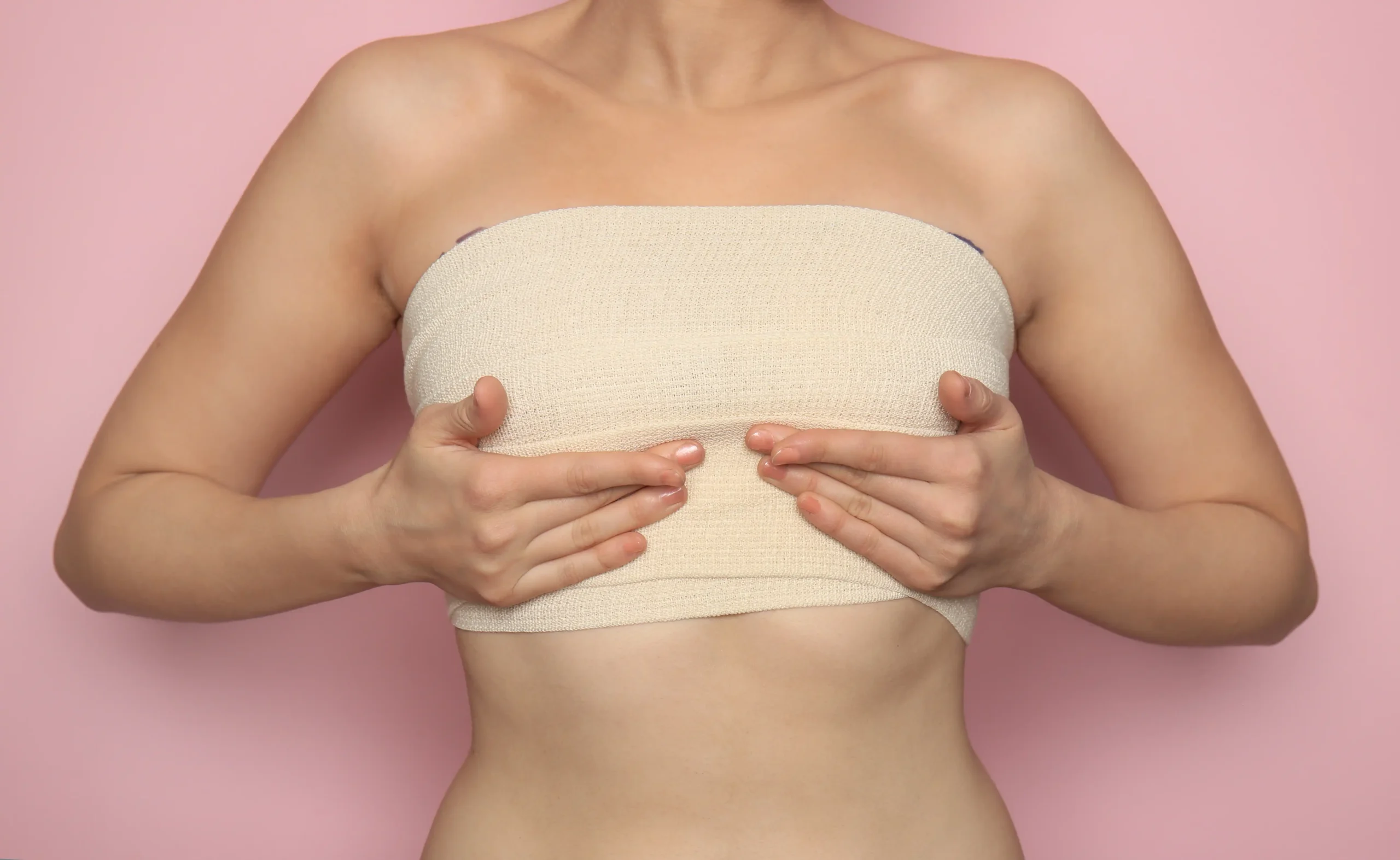
Breast augmentation is a surgical procedure by which a prosthesis is placed behind the breast tissues to increase their volume in order to create a balanced appearance to your body.

The breast is a part of the body that can represent a complex for many women and therefore for some women, breast augmentation can be a purely aesthetic approach.

Although they have a satisfying breast, some women may want a breast augmentation to switch from a B-cap to a C or D cup.

Breast augmentation can also occur after one or more pregnancies or weight loss in order to restore volume and lost curve or in order to correct an asymmetry.

How does surgery work?

Breast augmentation is a personalized surgical procedure in which implants are placed to enhance breast size and shape. During the operation, incisions are made in discreet locations, and the implants are positioned either beneath the chest muscle or directly behind the breast tissue, based on your anatomy and desired outcome. The procedure is performed under anesthesia, and your surgeon takes great care to ensure symmetry, natural proportions, and an overall balanced silhouette.

Are you good candidate?

You may be a good candidate for breast augmentation if you are in good general health, have completed breast development, and seek to enhance the size or shape of your breasts for personal reasons. Ideal candidates have realistic expectations, understand the surgical process and recovery, and are committed to open communication during the consultation to establish goals that align with their body and lifestyle.

The volume of breast implants is important

In order to determine most accurately what is most suitable for your morphology, during the consultation you will have the opportunity to try several volumes of prostheses. We suggest you bring a tight T-shirt with you. Depending on the findings of the physical examination and the volume chosen for your breast augmentation, Dr. Bélanger will offer you a choice of prostheses (salines vs silicone gel), the type of incision chosen and the ideal volume she recommends. The consultation also makes it possible to assess whether a breast reshed should be done at the same time as the breast augmentation. The risks associated with breast augmentation will then be explained in detail. It is normal to be unable to make a decision on the spot and often a few days of reflection are necessary before making the big leap.

Before and after Breast augmentation

Disclaimer: These photos are published for illustrative purposes only to provide information on the nature of the procedure. They do not constitute a guarantee of results.

Years of Combined Experience
0 +
Treatments Performed
0 +
Client Satisfaction
0 %+
Advanced Treatments
0 +

Frequently Asked Questions

What types of prostheses are used?

Silicone gel prostheses: these prostheses give a natural look to your breasts and have a texture more similar to breast tissue. They are less likely to give a wave effect, that is, the effect of seeing the folds of the prosthesis through a thinner skin. For these reasons, silicone gel prostheses are more often favored in the patient with very little breast tissue.

Sanitary water prostheses: these prostheses are a great option for women who do not want to use silicone gel prostheses or with special needs. The ripple of the prosthesis may be more visible when it is filled with salt water, especially in very thin women or with little breast tissue. In addition, this implant is easier to feel to the touch.

Here are the differences between the two options that will be discussed with your surgeon:

On the pectoral muscle :

  • Cohesive gel implants only.
  • Cleavage between more natural breasts.
  • Capsule rate around 10 to 20%.
  • Convalescence of about a week.

Under the pectoral muscle:

  • Cohesive or saline gel implants.
  • Cleavage between the breasts can look wider.
  • Very rare capsule level.
  • Convalescence of about 2 to 3 weeks.

Although rare, the surgeon should warn you of possible complications and risks before proceeding with breast augmentation.

After a breast augmentation, you should be able to breastfeed and your breastfeeding function should be the same as before surgery, assuming this function was normal before.

Temporarily, some patients may have nipples a little numb after surgery and others may feel the opposite and have hypersensitive nipples. In most cases, this is temporary. Studies have shown that some patients have lost their sensitivity after the placement of huge breast prostheses because the prostheses crush the sensory nerves.

If you have saline water prostheses, the prosthesis will deflate and your body will reabsorb saline water and your breast will become flat.

In the case of silicone prostheses, it will be a so-called silent rupture (at least during the first years). It is therefore recommended to do an ultrasound to 4-5 years after the installation of silicone prostheses and then 2 to 3 years to ensure that the prostheses are intact.

For people who have an office style job, it is recommended to take 1 week of rest at home. If the work is very physical, a stop of 3-4 weeks is recommended, or otherwise a stop of one week with a return to work but with light work.

You should avoid doing intense physical exercise and lifting heavier weights than 10 pounds for the 2 to 3 weeks after your surgery in order to give your body the chance to heal comfortably. You can resume your regular physical activities about 4 to 6 weeks after the operation. Pain or discomfort at the time of exercise is a sign that your body is not quite healed, and that it would be recommended to try again in a few days or weeks.

Request a Consultation

Take the first step toward your surgical goals with a confidential, personalized consultation.

Create an account to access this functionality.
Discover the advantages