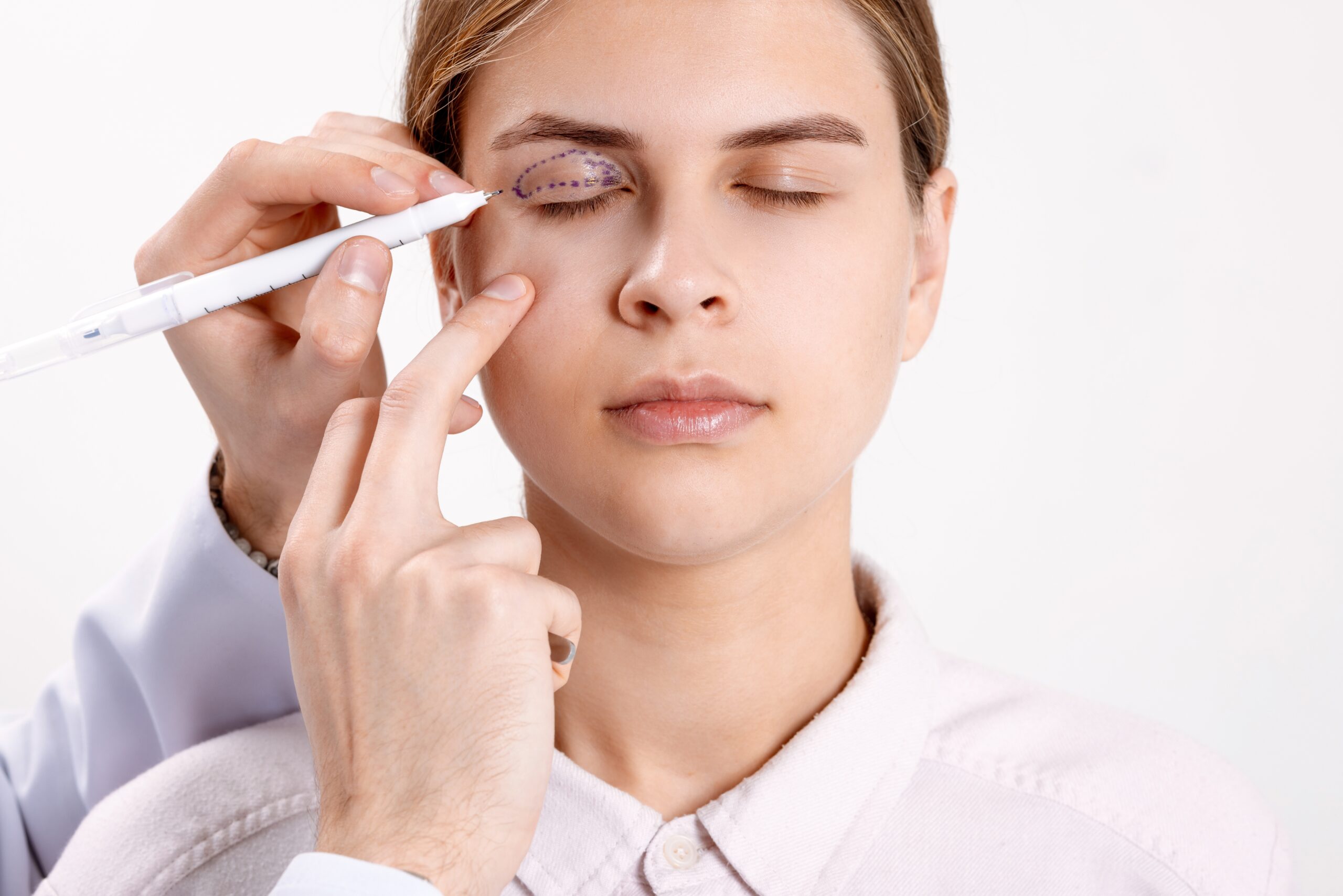
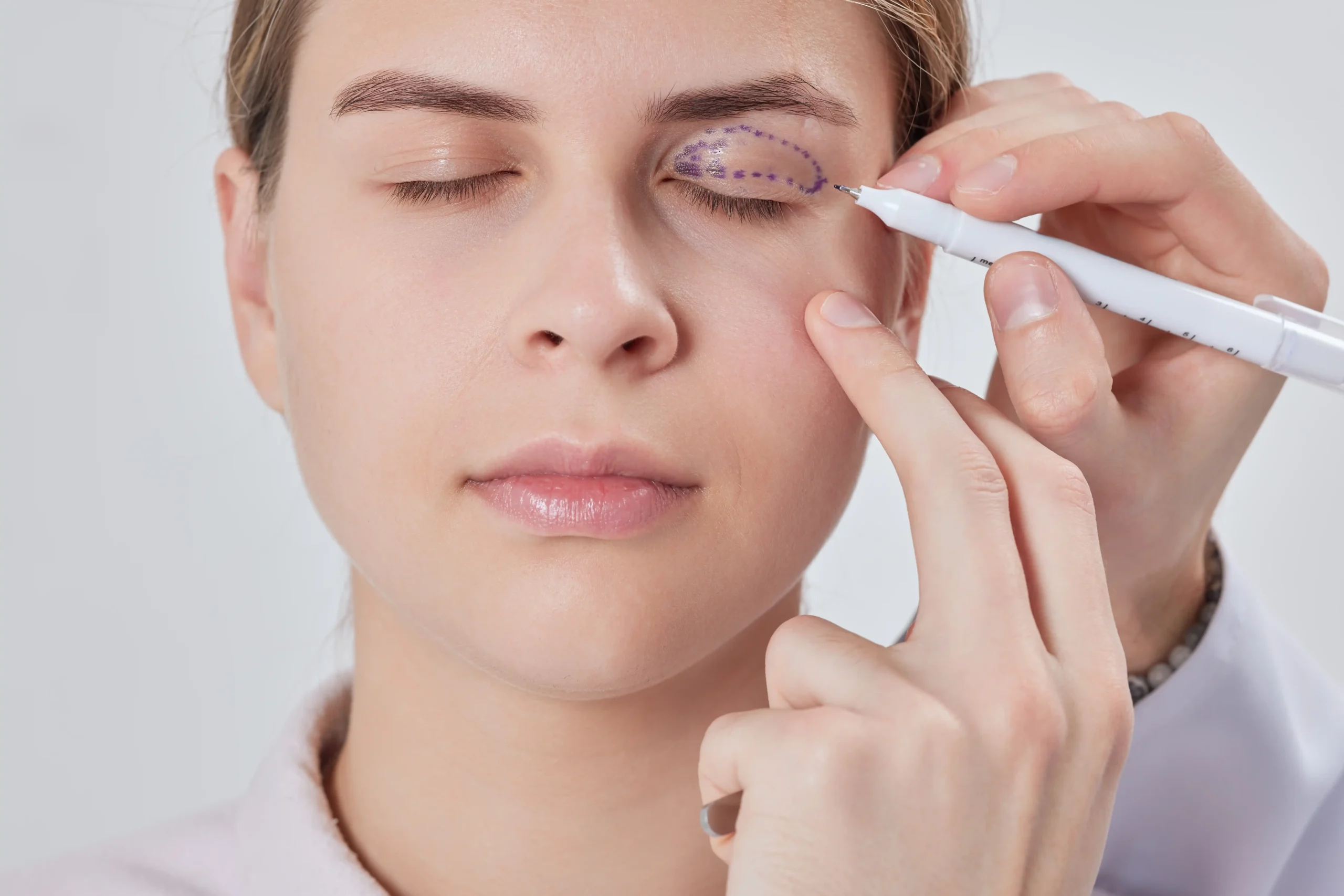
Blepharoplasty, commonly called eyelid surgery, is a cosmetic surgical procedure that removes excess skin and fat from the upper and/or lower eyelids to refresh the eye area and reduce signs of aging or puffiness. The goal is a more alert, youthful, and natural appearance.
Blepharoplasty is performed through small incisions placed in natural eyelid creases or inside the eyelid. Excess skin, fat, and sometimes muscle are carefully removed or repositioned to eliminate sagging, puffiness, and bags. Upper eyelid surgery focuses on hooded, drooping skin; lower eyelid surgery targets fat bulges and loose tissue. Most procedures are done under local anesthesia with sedation or general anesthesia and are outpatient.
Good candidates are adults in generally good health who notice loose, sagging eyelid skin, puffiness, or bags that make them look tired or aged. Candidates should have realistic expectations about surgical outcomes and understand that blepharoplasty addresses eyelid appearance and comfort, not underlying facial structure. A medical consultation determines individual suitability.
As we age, eyelid skin loses elasticity and fat pads can bulge, making the eyes look tired or older than they feel. Blepharoplasty can open the eye area, improve the look of droopy lids and under-eye bags, and in some cases improve peripheral vision if excess upper skin obstructs sight. Results often create a refreshed, more youthful, and harmonious facial appearance.
Disclaimer: These photos are published for illustrative purposes only to provide information on the nature of the procedure. They do not constitute a guarantee of results.
Years of Combined Experience
0+
Treatments Performed
0+
Client Satisfaction
0%+
Advanced Treatments
0+
Frequently Asked Questions
Is blepharoplasty painful?
Most patients experience minimal discomfort during surgery due to anesthesia. Post-operative soreness and swelling are typical and can be managed with prescribed medication.
How long does the procedure take?
Blepharoplasty usually takes about 45 minutes to 2 hours, depending on whether upper, lower, or both eyelids are treated.
Is there visible scarring?
Incisions are made in natural eyelid creases or inside the lower lid, so any scarring is subtle and generally fades well over time.
What is the recovery like?
Swelling and bruising are normal for about 7–14 days. Many patients return to regular activities within 1–2 weeks, with full healing continuing beyond.
Will blepharoplasty improve my vision?
If sagging upper eyelid skin interferes with your peripheral vision, removing excess tissue may help improve sight in those cases.
How long do results last?
Results are long-lasting because the excess skin and fat are removed, but natural aging continues. Most patients enjoy many years of rejuvenated appearance.
Can I combine blepharoplasty with other procedures?
Yes. Blepharoplasty can be combined with other facial rejuvenation procedures such as brow lift or facelift to achieve a more comprehensive result, depending on your goals.
Request a Consultation
Take the first step toward your surgical goals with a confidential, personalized consultation.
Create an account to access this functionality.
Discover the advantages
We use cookies to ensure that we give you the best experience on our website. If you continue to use this site we will assume that you are happy with it.